
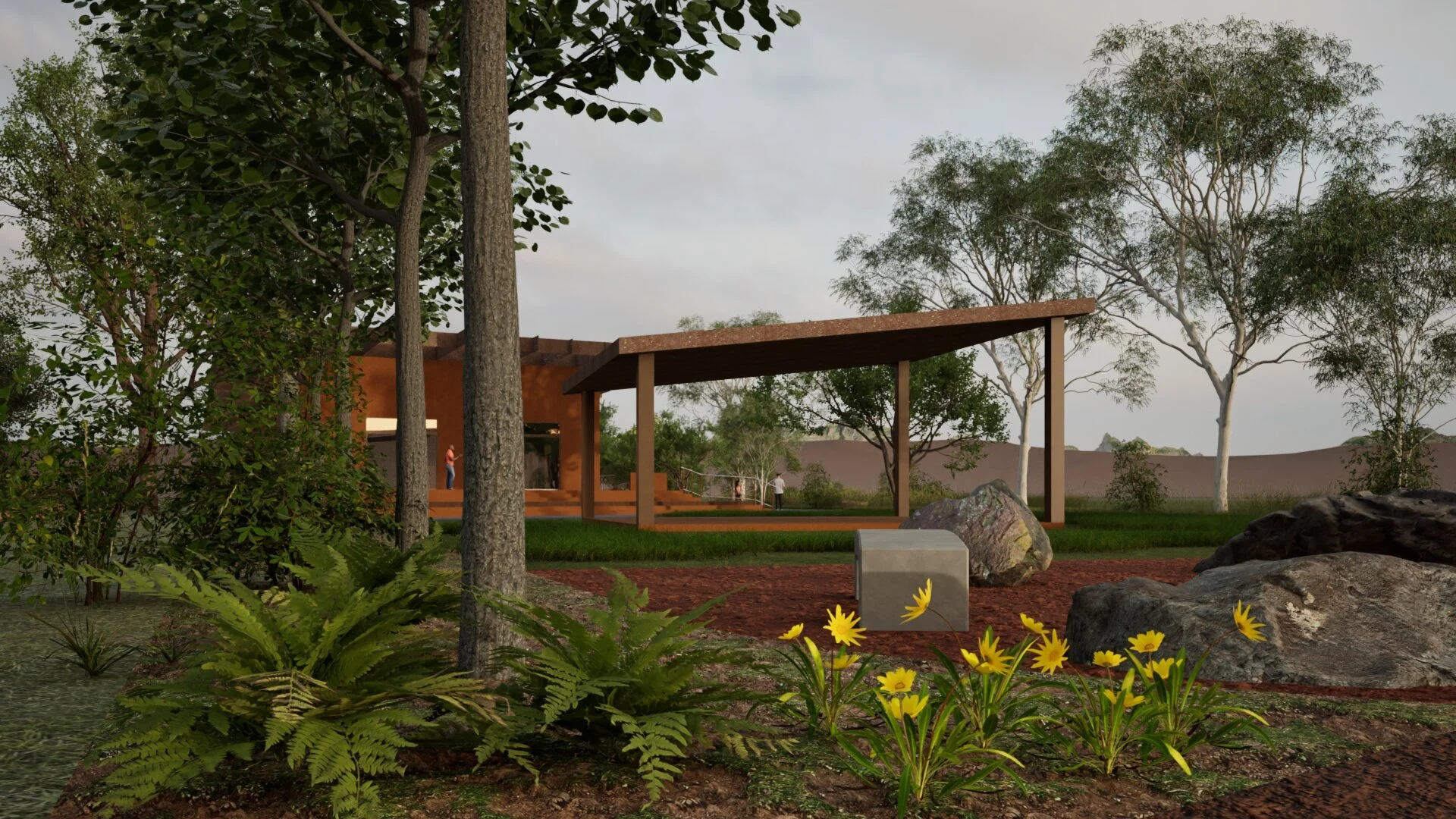
Doomadgee Future Planning Project
The Doomadgee Future Planning Project is a award-winning, multi-precinct design for the town delivering long-term social, cultural and economic transformation for Doomadgee on Gangalidda and Waanyi Country in Queensland's Gulf region.
About the Project
Work spanning urban design, landscape architecture, masterplanning, co-design, engagement and consultation, development application, economics social and business case, costings
-
Visitors Centre, New Town Centre and Business Hub, Community Hall, Council Building, Arts Centre, Roads and Infrastructure, Pavements, Riverfront and Day-use area
-
2022 - today
-
Catherine Simpson, Upendo Kowero, Meridian Urban, Doomadgee Aboriginal Shire Council and community.
National Urban Design Award Winner 2026
Engagement Institute Australasian Excellence Award Winner 2025
Aboriginal and Indigenous Engagement Award Winner 2025
The Doomadgee Future Planning Project is an award-winning, community-led initiative delivering long-term social, cultural and economic transformation for Doomadgee on Gangalidda and Waanyi Country in Queensland's Gulf region.
Led by Doomadgee Aboriginal Shire Council in partnership with the Queensland Government, the project responds to decades of under-planning by establishing a clear and deliverable vision for the future of the community. Through extensive co-design and engagement, the project has created a practical framework for investment, infrastructure delivery and place-based renewal that is directly shaped by local priorities.
The project reimagines Doomadgee through a series of interconnected precincts, including a new town centre, tourism and cultural destinations, an activated riverfront, campgrounds, and upgraded sporting and recreation facilities. Together, these initiatives strengthen community identity, improve liveability, create economic opportunities and support long-term self-determination.
A defining feature of the project has been its innovative engagement approach. Elders, young people, community organisations and residents have played a central role in shaping the future of their town through ongoing co-design workshops, on-Country engagement and iterative design development. This commitment to genuine community participation was recognised through the project's success at the 2025 Engagement Institute Awards, where it received both the Australasian Excellence Award and the Aboriginal and Indigenous Engagement Award.
Unlike a traditional masterplan, the Doomadgee Future Planning Project operates as a live planning framework, continually evolving in response to community aspirations, funding opportunities and implementation outcomes. This approach has created a strong pipeline of projects and secured significant investment, with many initiatives now completed or under construction.
Outcomes and Benefits
The project has already delivered tangible outcomes, including new pedestrian and cycling infrastructure, community facilities, recreation upgrades and a growing portfolio of funded projects. It has also informed the development of the award-winning Precincts and Partnerships Prospectus, an innovative investment and funding tool that has helped secure substantial government and grant funding for the community.
At its core, the Doomadgee Future Planning Project demonstrates how urban design can be a catalyst for equity, cultural resilience and lasting change. By combining deep community engagement with strategic planning and design-led thinking, it establishes a nationally recognised precedent for Indigenous-led planning and delivery in regional and remote Australia.
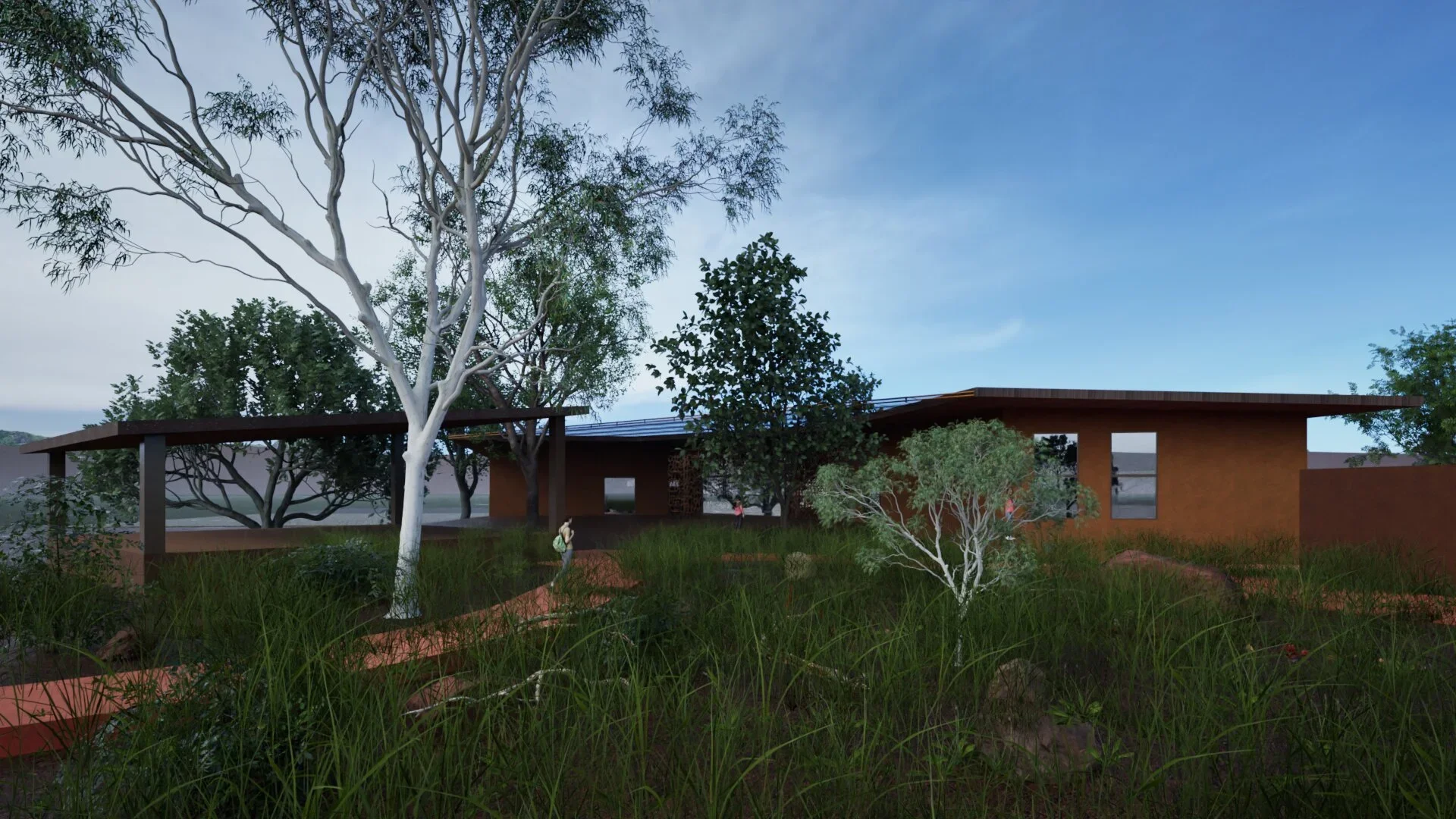
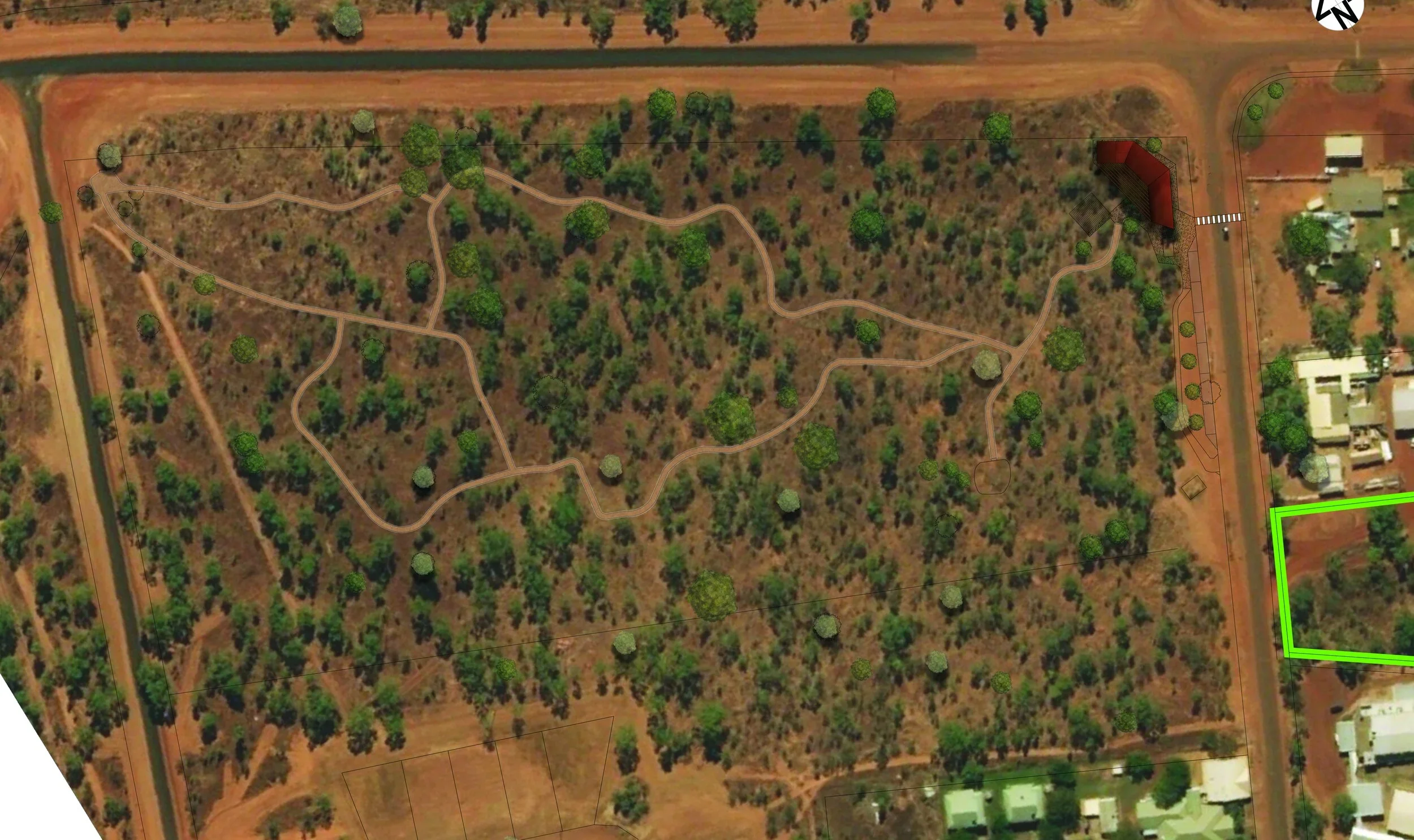
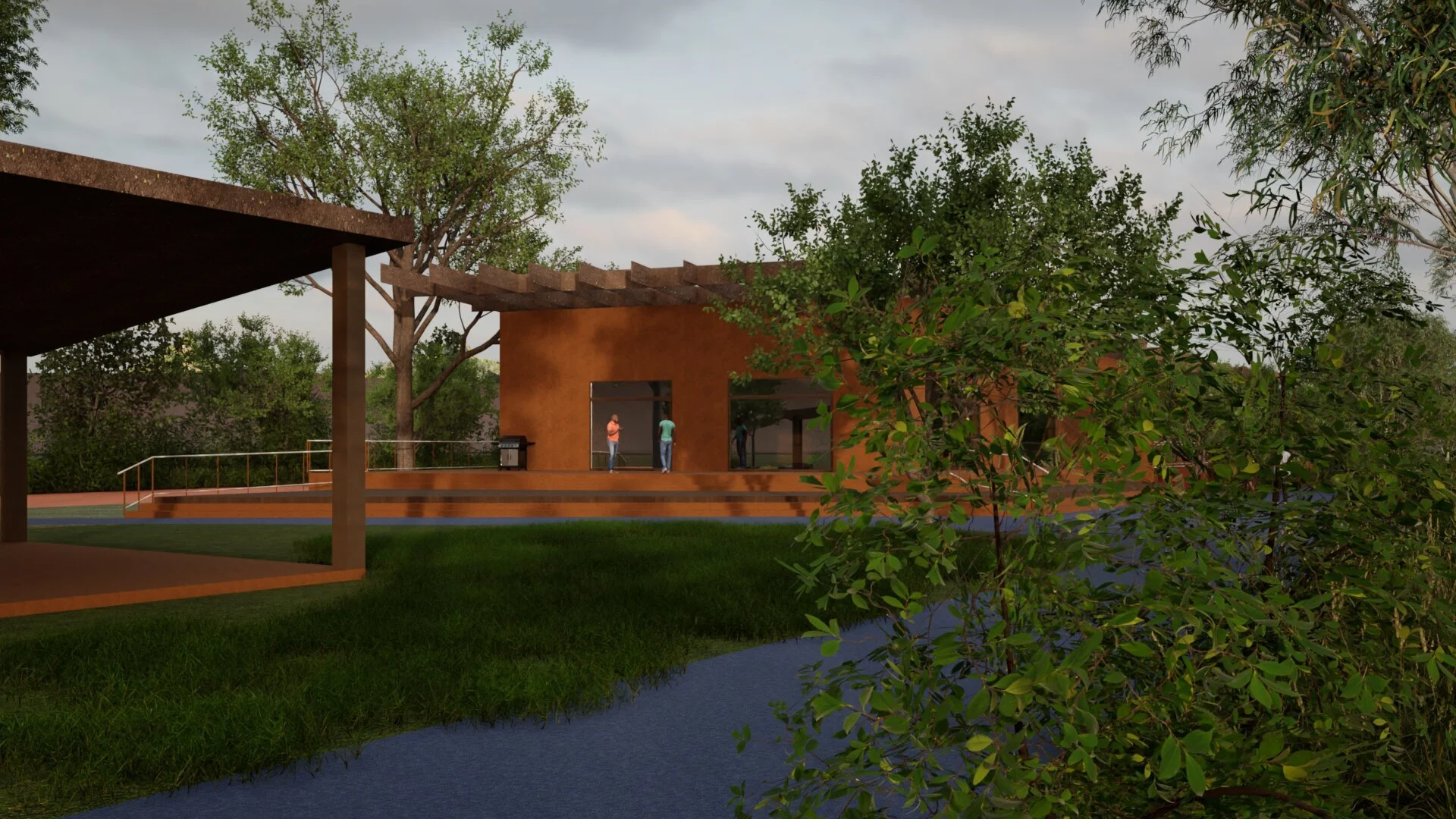
Doomadgee Future Planning Project
Project Overview - long form
The Doomadgee Future Planning Project is a multi-award winning community-led vision and implementation framework developed over three years in partnership with Doomadgee Aboriginal Shire Council, Traditional Owners, community members, local organisations and government agencies.
Located in the Gulf of Carpentaria, Doomadgee is a remote Aboriginal community and former Mission settlement that has historically experienced underinvestment, fragmented planning and limited opportunities for community-led decision making. The project sought to reverse this legacy through an innovative approach that combined strategic planning, urban design, placemaking, economic development and community engagement into a single, living process.
Rather than producing another static plan, the project established an ongoing framework for decision-making, project prioritisation and investment attraction that continues to guide implementation today.
Context
Doomadgee is the traditional homeland of the Gangalidda and Waanyi peoples, with Garrawa, Yunjulla and many other Indigenous nations now also calling the community home.
For decades, planning in remote communities has often been characterised by externally led studies, lengthy reports and limited implementation. Communities frequently experience consultation fatigue, with plans produced for government rather than practical local use.
At project commencement, Doomadgee lacked many of the civic, cultural and recreational facilities typically found in regional Queensland communities, including a library, dedicated cultural facilities, event spaces and quality visitor infrastructure. Numerous planning studies had been undertaken over time, yet implementation pathways remained unclear.
The challenge was not a lack of ideas. The challenge was converting community aspirations into deliverable projects and funded outcomes.
Design and Planning Response
The project adopted a fundamentally different approach.
Rather than treating engagement, planning, urban design and implementation as separate processes, they were integrated into a continuous cycle of listening, testing, designing and delivering.
Over three years, community members participated in workshops, events, exhibitions, conversations, surveys and co-design activities. Concepts were continually refined and returned to the community for review.
Importantly, the project moved beyond consultation to active co-design. Community feedback directly shaped proposals for:
The Doomadgee Town Heart
Visitor and Cultural Centre
Community Hall and Indigenous Knowledge Centre
Business and Enterprise Hub
Sports and Recreation Precinct
Rodeo Grounds
Nicholson Riverfront
Visitor accommodation and tourism initiatives
Streetscape and public realm improvements
Design concepts were displayed publicly and updated as feedback evolved, allowing community members to see how their input was influencing outcomes in real time.
Innovation
The project's most significant innovation was the creation of a "live planning" model.
Traditional planning processes typically conclude with the publication of a final report. In contrast, the Doomadgee Future Planning Project remained active, adaptive and implementation focused throughout its life.
Several innovations emerged:
Planning as an Ongoing Conversation
Plans were treated as living documents rather than fixed outputs. Priorities evolved in response to community feedback, funding opportunities and emerging needs.
Integration of Design and Delivery
Two live development applications were embedded within the engagement process. Community members were not merely commenting on future possibilities; they were actively shaping projects moving toward delivery.
Visual Planning
Complex planning concepts were translated into accessible visual material. Concepts were continually displayed, discussed and refined, helping bridge the gap between technical planning language and everyday community understanding.
The Prospectus
Perhaps the project's most influential output was the Doomadgee Prospectus.
More than 600 pages of planning studies, reports and technical material were distilled into a concise and compelling document that clearly communicated community priorities, investment opportunities and implementation pathways.
The Prospectus became a practical advocacy tool used by Council, government agencies and funding bodies to support investment attraction and project delivery.
Community Outcomes
The project generated significant social, governance and funding outcomes.
The process strengthened relationships between Council, community members and stakeholders by creating transparent and ongoing opportunities for participation.
Community members gained greater visibility of planned projects, while Council obtained a clear and community-endorsed framework for decision making.
Importantly, the project shifted planning from an externally driven activity to a locally owned process.
Economic and Funding Outcomes
The project directly supported funding applications and investment attraction efforts.
Through the Prospectus and associated project development work, Doomadgee secured approximately $2.5 million in State and Commonwealth funding for priority community projects.
Rather than simply identifying needs, the project created a pipeline of investable projects supported by community consensus, concept design and implementation pathways.
Legacy
The Doomadgee Future Planning Project demonstrates how planning in remote communities can move beyond consultation and reporting to become a genuine vehicle for community empowerment and project delivery.
Its legacy is not measured by the production of a plan, but by the creation of an ongoing framework through which community aspirations continue to shape investment, design and development outcomes.
The project provides a transferable model for regional, rural and remote communities seeking to bridge the gap between planning and implementation.
By transforming planning from a document into a living process, the project has established a new benchmark for community-led urban design and place-based planning in remote Australia.